There is a funny thing that happens with renovation projects: people think about them for years.
You walk through the kitchen every morning and think about how much better it could function. You save images of bathrooms you love. You talk about taking down that wall, replacing the flooring, opening up the kitchen, or finally reworking the room that has never quite functioned the way you want it to.
And then, somehow, “someday” becomes “we’re doing it!?”
Suddenly you are calling designers and contractors, talking about budgets, scheduling measurements, discussing permits, reviewing plans, and trying to figure out when construction might actually begin. After years of casually thinking about the project, it can feel like you went from dreaming about it to being fully in it almost overnight.
That transition is exciting, but it can also be overwhelming. It is one of the reasons we tell clients that if you are seriously thinking about renovating, furnishing, or making significant changes to your home in 2027, the end of 2026 is not too early to start the conversation.
In fact, it may be exactly the right time.
The Best Projects Are Well-Planned Projects
Starting early does not mean you need to know what your backsplash is going to be today. You do not need to have selected your sofa, paint colors, plumbing fixtures, or cabinet finish. That is what the design process is for.
Early planning is really about understanding the bigger picture.
What are we actually changing? What does that scope realistically cost? Who needs to be involved? Does the project require architectural drawings, engineering, permitting, HOA approval, contractor bids, or long-lead materials? And perhaps most importantly, does the project you have imagined align with the budget and timeline you have in mind?
Those questions are much easier to answer six months before you want construction to begin than six weeks before.
Inspiration Is Not the Same as a Project Plan
We love inspiration images. They are incredibly helpful in understanding what a client gravitates toward and how they want their home to feel.
But behind every beautiful finished room is a great deal of less-photogenic planning: floor plans, budgets, construction documents, measurements, contractor coordination, product specifications, electrical locations, plumbing requirements, lead times, freight, installation, and scheduling.
There are also dozens of decisions that depend on decisions made before them. Before we determine the right pendant, we need to know where the island is going. Before we finalize the island, we need to understand the kitchen layout. Before changing the layout, we may need to know whether a wall can move.
Design is beautiful, but design is also logistical. Giving that logistical side of a project enough time is one of the best things you can do for the project as a whole.
The First Phase Should Be About the Big Decisions
When we begin working with a client, we do not expect them to arrive with a perfectly defined project. Often, one of our first jobs is helping define it.
You may initially think you are renovating the kitchen and then realize that changing the kitchen impacts the flooring throughout the first floor. Or that opening a wall changes the lighting plan. Or that once the kitchen and living room are visually connected, they need to be considered together.
You may also discover the opposite: that the dream project exceeds the budget you are comfortable investing, and the smartest move is to reduce the scope or prioritize the areas that matter most.
That is valuable information. It is much better to discover it while planning than after construction is already on the calendar.
Early conversations allow the scope, budget, team, and timeline to develop together because they all affect one another. Change one, and there is a good chance another needs to change too.
Plan for the Real Cost of the Project — Not Just the Construction Number
Another important part of early planning is understanding how the project will actually be funded and what the full investment needs to cover.
Sometimes clients begin with a construction budget in mind, but the true cost of executing the finished vision is broader than that. Design fees, architectural or engineering work, permitting, deposits, cabinetry, contractor mobilization, and other major construction costs often come relatively early in the process. By the time we get to the finishing layers — lighting, plumbing fixtures, tile, hardware, window treatments, furnishings, art, and accessories — a significant amount of the budget may already be committed.
That is where things can start to feel unexpectedly tight.
And unfortunately, those later selections are often the pieces that make the finished space feel complete, personal, and intentional.
We see projects where the renovation itself is beautifully executed, but the budget did not fully account for everything needed to carry the design through to the end. The space is technically finished, but some of the elements that were central to the original vision have been reduced, postponed, or removed entirely simply because the overall investment was not planned early enough.
This is not about encouraging clients to spend more than they are comfortable spending. It is about making sure the scope and the budget are speaking the same language from the beginning.
If financing will be part of the project, early planning also gives you time to understand those options before deposits and invoices start arriving. Whether the project is being funded through savings, a HELOC, renovation financing, or another source, having that structure in place early can make the process feel much more manageable.
The goal is to build a realistic picture of the full project cost early enough that we can make thoughtful decisions about where to invest, where to simplify, and how to protect the parts of the design that matter most.
That way, when we reach the final stages of the project, we are not asking, “What can we cut now?” We are working within a plan that was designed to get the project all the way to the finish line.
Budget Conversations Take Time — and They Should
This is one of the biggest reasons we encourage clients to start earlier than they think they need to.
There is often a difference between thinking abstractly about what a renovation might cost and seeing real numbers attached to your renovation. That does not mean something has gone wrong. It simply means the project is becoming real.
We see this happen often. A client sends the inquiry, we have the initial conversation, everyone gets excited, and the project starts taking shape. We begin discussing scope and design, contractors become involved, and estimates or bids start coming together.
Then there is often a moment when everyone needs to stop and process.
Maybe the scope needs to be adjusted. Maybe certain pieces should happen later. Maybe we invest more heavily in the areas that matter most and simplify somewhere else. Maybe the numbers are exactly what we anticipated, but seeing them in writing still requires a minute.
That pause is completely normal. A major renovation is a significant financial decision, and you should have enough time to understand the numbers and feel comfortable with what you are committing to.
What we do not want is for that reasonable decision-making process to happen while the house is already packed into boxes and everyone is staring at a construction start date.
“We Probably Should Have Called You a Few Months Earlier.”
We hear some version of this surprisingly often.
Usually it is not because someone procrastinated. It is because most homeowners understandably do not realize how much happens before construction – or worse, they already started the renovation and there was no plan in place. This almost always results in a project that doesn’t meet the projects goals even once we get involved.
From the outside, the timeline can seem simple: hire the designer, design the house, hire the contractor, start construction. The scary version is: hire the contractor, start demo, find a designer, start designing….. read our related article “Interior Designer vs. Contractor: Who Do I Call First?’
In reality, those stages overlap and inform each other. Design decisions affect contractor pricing. Contractor feedback can affect design decisions. Pricing can change the scope. Scope changes may require updated drawings or selections. Some materials need to be ordered well before construction begins, and permitting may introduce its own timeline.
Suddenly, the months that seemed like “extra time” are not extra at all. They are part of the project.
Starting Early Gives You More Options
One of the biggest advantages of starting early is simply having more choices.
You have more time to assemble the right team rather than hiring whoever happens to be available. Your designer has more time to thoughtfully develop the project. Contractors have time to provide meaningful pricing. You have time to react to that pricing, make adjustments, and consider products with longer lead times.
When every decision becomes urgent, your options naturally narrow.
The question stops being, “What is the best solution for this space?” and becomes, “What can we get in time?”
Those are very different ways to design a home.
There May Be More People Involved Than You Think
Depending on the project, your designer may only be one member of a larger team. A renovation might involve an architect, general contractor, structural engineer, cabinetmaker, lighting specialist, AV integrator, landscape designer, or other trades and consultants.
Good professionals also have schedules.
Starting early gives you time to determine who the project actually needs, understand their availability, and establish how everyone will work together. For some projects, bringing a contractor into the conversation during design can also be extremely helpful because preliminary pricing and constructability feedback can help keep the project aligned before every detail is finalized.
Then there are permits, architectural approvals, HOA requirements, engineering, or other documentation that may apply depending on where you live and what you are changing. These are not always difficult hurdles, but they do require time, and they are not always timelines your designer or contractor can control.
Starting Early Does Not Mean Living in Renovation Mode for a Year
This is an important distinction.
If you want to renovate next summer, we are not suggesting you start tearing your house apart this fall. Starting early simply allows the beginning of the process to be calmer.
The first phase may be conversations about how you live, what is not working, what you want to change, how much you want to invest, and what a realistic timeline might look like. From there, the project gradually becomes more detailed.
By the time you are selecting finishes, furnishings, plumbing, lighting, or cabinetry, those decisions are being made within a framework that already makes sense.
Instead of asking, “What should we pick?” in isolation, we are asking, “What is the right choice for the project we have already thoughtfully defined?”
That is a much easier question to answer.
You Do Not Need to Know Your Exact Start Date
Sometimes clients hesitate to reach out because they do not yet have a construction date. That is okay.
“I would like to renovate sometime in 2027” is enough to begin a conversation.
Part of early planning is figuring out what a realistic timeline actually looks like. If you have a target completion date tied to a move, holiday, wedding, graduation, or another milestone, tell your team. Often, the desired completion date is more useful than an arbitrary construction start date because we can work backward from it.
The earlier we have that conversation, the more realistic the plan can be.
A Little Breathing Room Changes the Entire Experience
Renovations will always contain some surprises. A wall may hide something unexpected. A material may be delayed. A product can arrive damaged. Existing conditions can require an adjustment. Weather can delay a concrete pour.
There will always be parts of construction that are outside everyone’s control, which is exactly why the portions we can control should not begin in a panic.
You want enough breathing room to make thoughtful decisions, understand your budget, compare options, change direction when something does not feel right, and allow your design team to solve problems before they become expensive problems in the field.
And you want enough time to actually enjoy some of it! Because despite all the logistics, designing your home should still be exciting.
So, When Should You Call a Designer?
Earlier than you probably think. Read our longer thoughts on this in the article: “When Should You Hire an Interior Designer?“
If a substantial renovation is something you hope to begin in 2027, now is an entirely reasonable time to start the conversation.
You are not committing to a cabinet color tomorrow. You are beginning to establish the roadmap that eventually gets you to the finished home.
Maybe construction begins next spring. Maybe next summer. Maybe the planning process reveals that fall makes more sense.
That is okay.
The point of starting early is not to rush toward construction.
It is to remove the need to rush at all.
You have probably spent years thinking about this project. You deserve more than a few frantic months to actually plan it.
Start with the big questions. Define the scope. Understand the budget. Build the right team. Identify the logistical requirements. Develop the design.
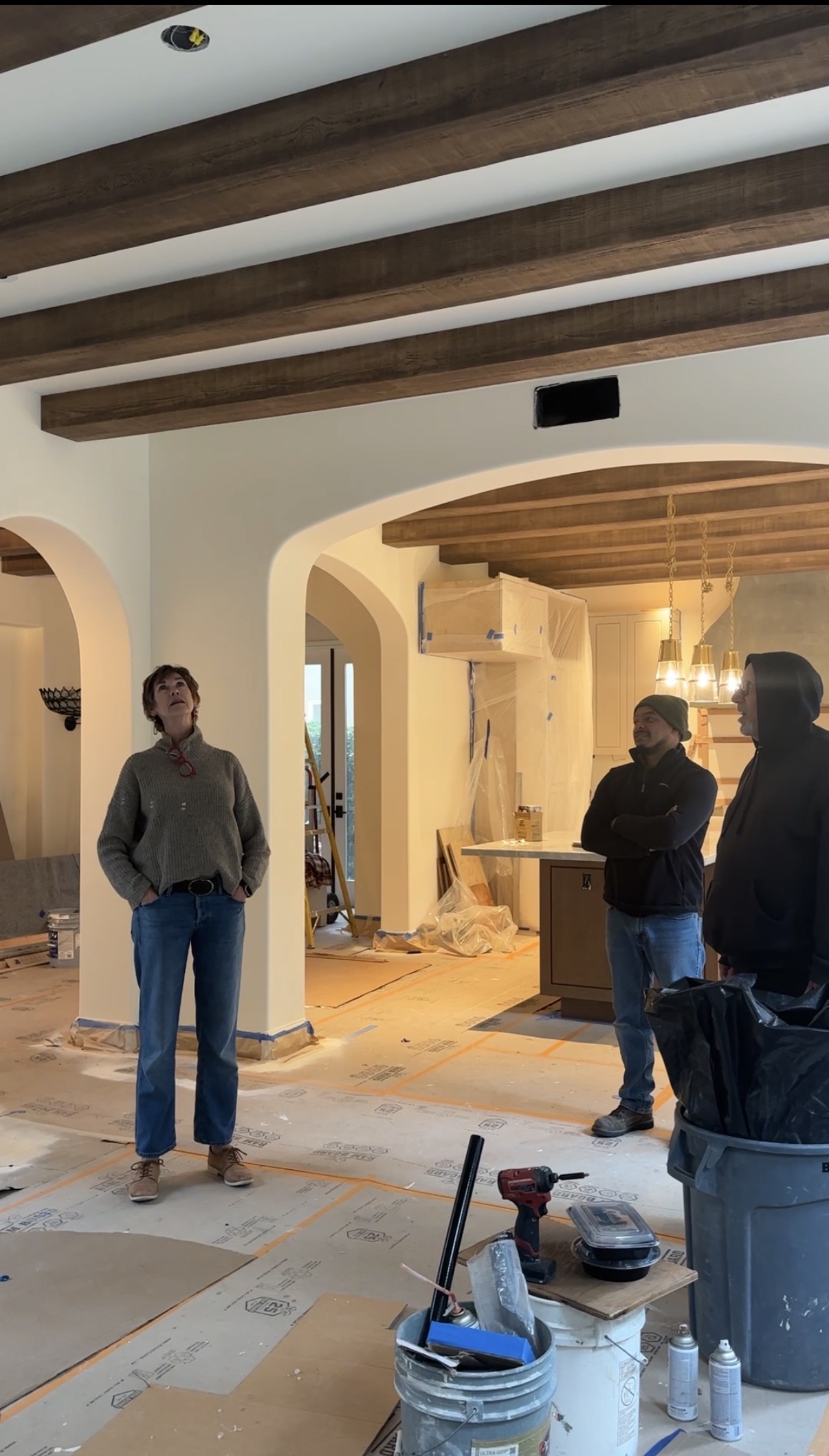
Then, when construction finally begins, it will not feel like you suddenly jumped from dreaming about your renovation to standing in the middle of one.
You will know exactly how you got there — and where you are going.
Thinking about a 2027 project? We’d love to start the conversation.

10 Comments