A whole-home renovation is one of the most exciting and significant projects you can take on as a homeowner. It is a chance to rethink how your home looks, feels, and functions. It is an opportunity to solve the daily frustrations you have lived with for years, elevate the way your family uses the home, and create something that feels deeply personal to your lifestyle.
It is also a major undertaking.
A successful whole-home renovation requires more than beautiful finishes and good ideas. It requires planning, communication, budgeting, scheduling, decision-making, and a team that understands both the big picture and the smallest details. At R Johnston Interiors, we approach large-scale renovations and new construction projects with both lenses in mind: the architectural flow of the home as a whole and the cabinet knob you will physically touch every morning.
Both matter.
The layout, materials, lighting, cabinetry, furnishings, hardware, and final styling all work together to create the finished experience of a home. When these details are considered early and holistically, the result feels intentional, functional, and beautifully customized. When they are not, even a major investment can feel disconnected or unfinished.
Before beginning a whole-home renovation, here are the most important things to understand.
Start With the Right Team
One of the first steps in a major renovation or new build is assembling the right professional team. Depending on the scope of work, this may include an interior designer, general contractor, architect, structural engineer, specialty trades, landscape designer, and other consultants.
Every project is different. Some renovations require architectural drawings and structural engineering. Others may be more interiors-focused but still need a skilled general contractor and experienced trades. The key is understanding who needs to be involved and when.
The earlier the right team is brought together, the smoother the process tends to be. Each professional looks at the project through a different lens. A contractor is thinking about construction logistics, trades, and buildability. An architect may be focused on structure, exterior form, and spatial relationships. An interior designer is looking closely at how the home will actually be lived in: where furniture will go, how cabinetry will function, where lighting should land, how materials transition, how storage supports daily life, and how every decision contributes to the overall feeling of the home.
When the team collaborates early, there is more opportunity to catch issues, improve layouts, and make smart decisions before construction begins.
Understand the Value of Early Interior Design Involvement
Many homeowners think an interior designer comes in after the plans are complete or once construction is underway. In reality, the earlier an interior designer is involved, the more thoughtful and comprehensive the renovation can become.
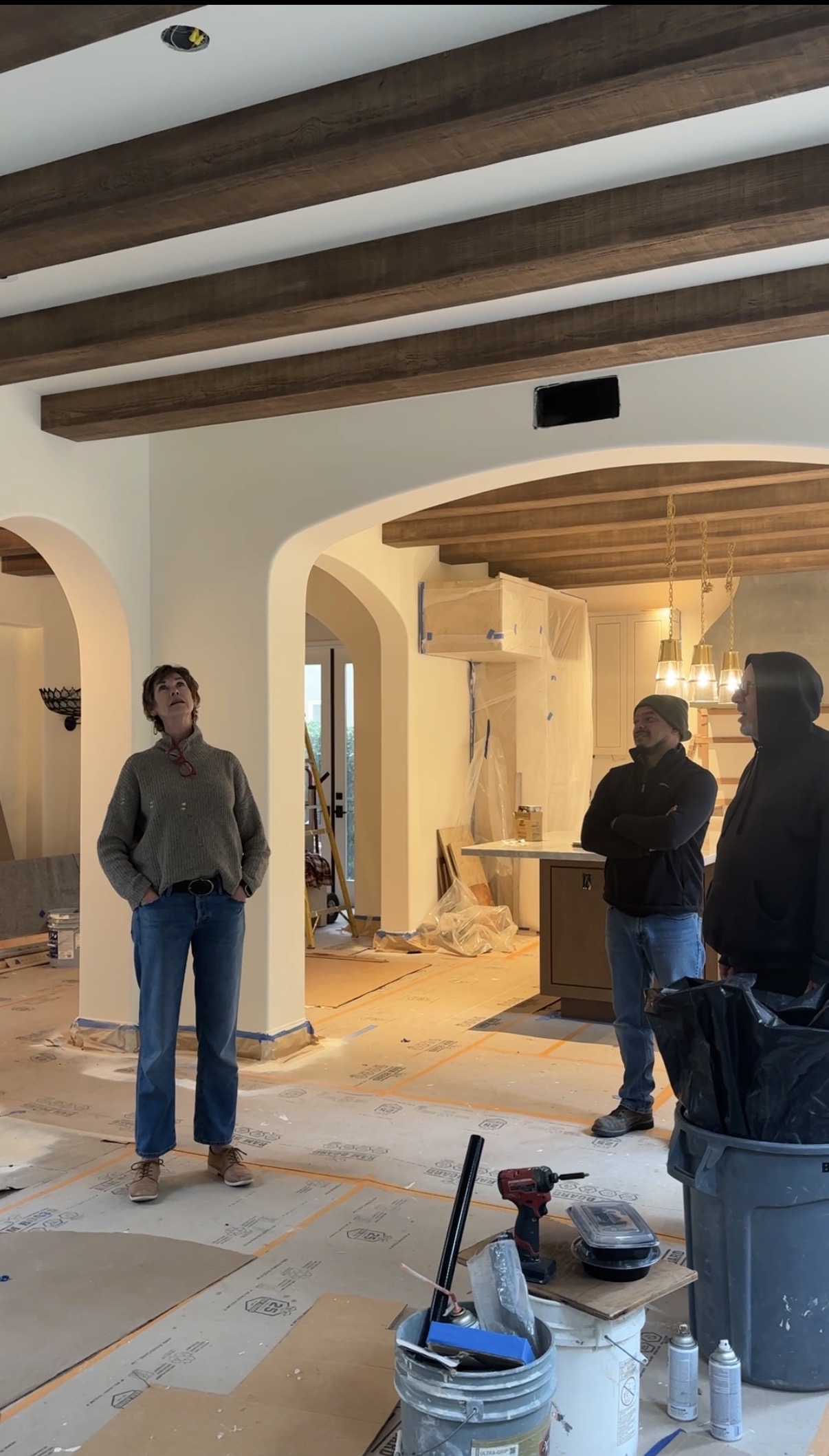
We often see small changes that make a big impact. A doorway shifted slightly can improve furniture placement. A window adjusted by a few inches can make cabinetry work better. A ceiling detail can change how lighting is experienced. The placement of an outlet, sconce, built-in, or shower niche can affect how the space functions every day.
These may seem like small decisions, but they shape the way you live in the home.
Interior designers are often the most personal member of the project team because we ask very detailed questions about lifestyle. How do you cook? Where do you drink your coffee? Do you host often? Do you need closed storage or open display? How do your children use the home? Do you have pets? What furniture matters to you? What do you touch, use, see, and experience every single day?
Those answers inform everything from the floor plan to the cabinet hardware.
A whole-home renovation is not just about making a home look better. It is about making it work better for the people who live there.
Plan Your Budget Thoughtfully
Budget planning is one of the most important parts of a successful whole-home renovation. It is also one of the most difficult areas for homeowners to understand at the beginning, especially if they have never renovated at this scale before.
A renovation budget is not just finishes and furniture. It may include design fees, architectural fees, engineering, permitting, contractor costs, labor, rough materials, finish materials, cabinetry, stone, tile, plumbing fixtures, lighting, appliances, hardware, window treatments, furnishings, art, accessories, installation, and contingencies.
The investment can vary widely depending on the size of the home, the age of the property, construction needs, quality level, customization, and how much of the home is being touched.
Before starting, it is important to think honestly about what you are willing and able to invest. For some homeowners, the investment is tied to resale. They may be thinking, “We plan to live here for another five years, and these renovations make sense based on the home and the market.” For others, the investment is more personal. They may be creating a forever home, improving the way their family lives, or choosing a level of customization and quality they want to be surrounded by every day.
Both perspectives are valid.
The important thing is to understand what the renovation means to you. Is this a financial investment, a lifestyle investment, or both? Are there areas where you want to prioritize quality and customization? Are there areas where you are comfortable being more cost-effective? What parts of the home matter most to your daily life?
A clear budget does not limit creativity. It gives the design team a framework to make smart, strategic decisions.
Be Realistic About Timeline
Whole-home renovations take time. The construction phase itself can be lengthy, but it is important to understand that a successful project also requires several months of design and planning before construction begins.
This planning time is not wasted time. It is where the project becomes stronger.
During the design phase, ideas can be explored on paper, in drawings, in elevations, and often in 3D. Layouts can be studied. Cabinetry can be refined. Materials can be compared. Lighting can be planned. Furnishings can be considered alongside construction decisions. Details can be coordinated before they become expensive or difficult to change.
Design is much easier to explore before walls start getting built.
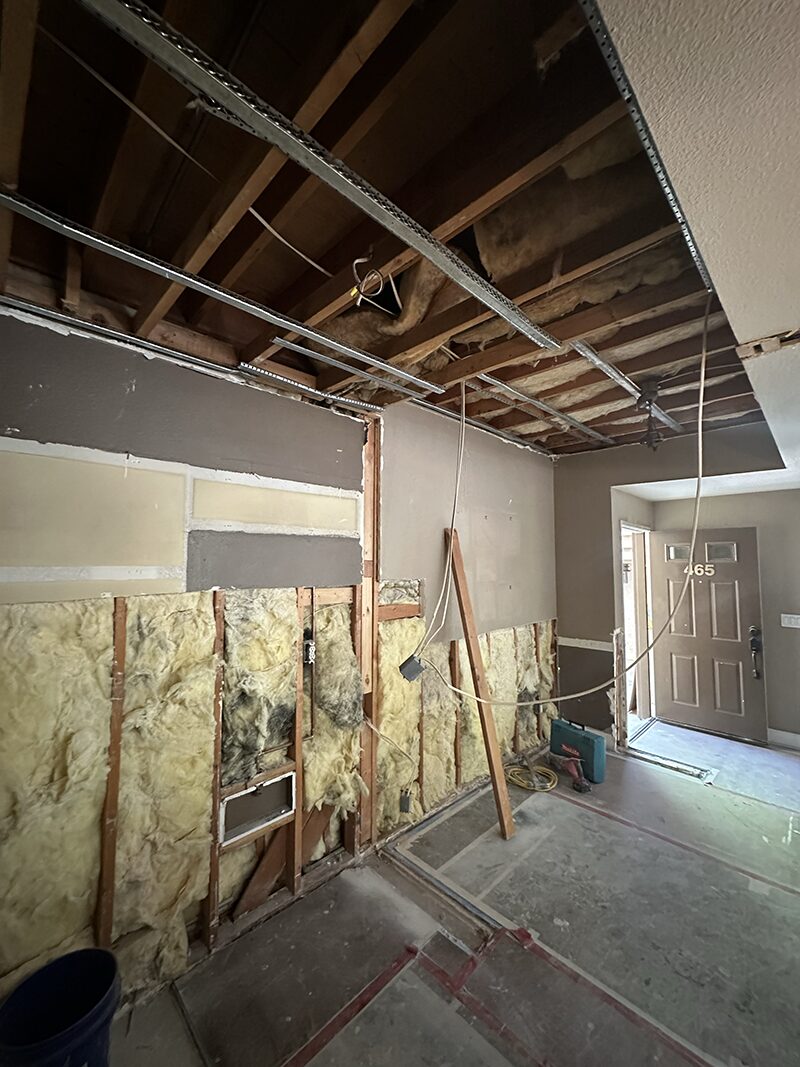
Once construction begins, changes can affect the schedule, budget, trades, and overall flow of the project. A decision that seems simple may have a ripple effect. Moving a wall may affect electrical, HVAC, cabinetry, flooring, or tile. Changing a plumbing fixture may affect rough-in. Waiting too long to select a material may delay ordering, installation, and the trades scheduled after it.
A thoughtful design and planning phase helps reduce those risks.
Make Decisions Before They Become Urgent
One of the biggest reasons renovation projects stall is that decisions have not been made in time. Construction moves in sequence. Framing, electrical, plumbing, drywall, cabinetry, countertops, tile, flooring, paint, lighting, and final installation all depend on the right information being available at the right time.
When decisions are delayed, the project can come to a halt.
This creates time delays, but it can also create financial consequences. Trades may be waiting for direction. A contractor may need answers before moving forward. Materials may not be ordered in time. Something that was available when originally selected may become backordered or discontinued by the time it is needed.
That is why decision-making is such an important part of the process.
At R Johnston Interiors, we work hard to understand our clients’ preferences, needs, and priorities so we can down-select options before presenting them. The goal is not to overwhelm you with every possibility. The goal is to give you thoughtful, curated options that support the overall design direction and make decision-making feel more manageable.
Prepare for Decision Fatigue
Decision fatigue is very real in a whole-home renovation.
At the beginning, the process can feel exciting and full of possibility. You are dreaming, exploring, and imagining what the home could become. But as the project continues, the number of decisions can start to feel overwhelming. Tile, stone, plumbing, lighting, cabinet profiles, hardware, paint colors, flooring transitions, grout colors, appliance panels, window treatments, upholstery, rugs, art, accessories—the list is long.
Before beginning a major renovation, it is helpful to understand how you process information and make decisions.
Do you like to see every option, or do you prefer a few carefully selected choices? Do you need time to think, or do you make decisions quickly when the right option is presented? Are there areas of the home where you want to be highly involved? Are there areas where you are comfortable trusting the design team’s expertise?
Knowing this about yourself helps the process run more smoothly.
Our job is to guide the decision-making process in a way that feels organized and thoughtful. We want our clients to feel involved where it matters most, while also being able to step back when they are ready to trust our recommendations.
Expect Some Delays, But Plan to Avoid Them
Every member of a renovation team shares the goal of keeping the project moving smoothly and on schedule. A clear schedule matters. It helps clients plan their lives, helps contractors coordinate trades, and helps designers manage selections, orders, and installations.
At the same time, it is important to understand that delays can happen.
Permitting can take longer than expected. Existing conditions may be uncovered once walls are opened. A product may be backordered. A trade may need to adjust timing. A custom item may take longer to fabricate. A material that was available when selected may later become delayed or discontinued.
There are many ways to reduce the risk of delays, and we walk our clients through those steps as we get started. Early planning, clear communication, timely approvals, realistic scheduling, and proactive ordering all help protect the project.
Our goal as a studio is always to keep to the schedule because it is important to us that we meet our clients’ expectations and needs. We know a renovation affects daily life, routines, finances, and sometimes where a family lives during construction. Schedule management matters because the project is not happening in a vacuum. It is happening around real people.
Understand That Reselections May Happen
In a perfect world, every item selected at the beginning of the project would be available exactly when it is needed. In reality, reselections are sometimes inevitable.
We try to avoid reselections as much as possible by designing holistically and planning ahead. Every selection is made to support the overall design. Tile, stone, cabinetry, plumbing, hardware, lighting, and furnishings are not chosen randomly. They are connected pieces of the larger vision.
This is why reselections can be more complicated than simply swapping one item for another.
For example, a tile may be selected because it works beautifully with a feature stone countertop. If a project is delayed during framing and the tile order is pushed back, that tile may no longer be available by the time it is needed. Now the replacement tile has to work not only on its own, but with the stone, cabinetry, flooring, lighting, and overall palette.
A simple stock issue can create a design ripple effect.
When this happens, we work quickly and thoughtfully to find an appropriate solution. But this is also why timing, ordering, and schedule coordination are so important. The more aligned the project team is, the better we can protect the design intent.
Leave Room for Exploration
While there is a lot of planning, budgeting, scheduling, and coordination involved in a whole-home renovation, the process is also supposed to be exciting.
This is your chance to dream big.
It is an opportunity to explore ideas you may not have considered before. Sometimes clients come in with a clear vision, and sometimes they know more about what is not working than what they want instead. Both are completely okay.
A strong design process allows room for discovery. It gives you space to imagine new ways of living in your home, consider materials you have not seen before, rethink old layouts, and create moments that feel special, personal, and unexpected.
The best homes are not created by simply selecting what is trendy or familiar. They are created by asking better questions, exploring possibilities, and making thoughtful decisions that support the people who live there.
Think From the Big Picture Down to the Smallest Detail
A whole-home renovation requires both wide-angle thinking and detailed execution.
The big picture matters: how the home flows, how rooms connect, how the architecture supports the interiors, how light moves through the space, and how the overall design feels from room to room.
The details matter too: the cabinet knobs, the edge detail on the countertop, the way a drawer opens, the feel of the tile underfoot, the height of a sconce, the softness of a fabric, the exact tone of the wood floor, the hardware you touch every day.
A successful renovation brings those two scales together.
At R Johnston Interiors, we believe the beauty of a home is found in that balance. A whole-home renovation should feel cohesive and considered, but also personal and livable. It should reflect your style, support your routines, and hold up to the way your family actually uses the home.
Know What You Want to Be Involved In
Before starting a large renovation, it is helpful to think about how involved you want to be in different parts of the process.
Some clients love materials and want to be deeply involved in tile, stone, and finishes. Others care most about layout and function. Some are passionate about kitchens. Others want to be involved in furnishings and styling but prefer to trust the design team on construction details.
There is no right answer.
The important thing is communication. When we understand where you want to be closely involved and where you are comfortable letting us lead, we can structure the process in a way that feels better for you.
A whole-home renovation includes hundreds of decisions. You do not need to carry all of them alone.
Final Thoughts Before Starting a Whole-Home Renovation
A whole-home renovation is a significant investment of time, energy, and resources. It requires patience, planning, and trust. But with the right team and process in place, it can also be one of the most rewarding experiences you have with your home.
Before starting, take time to think through your goals, budget, timeline, priorities, and decision-making style. Bring the right professionals in early. Allow time for design and planning before construction begins. Expect that some delays or reselections may happen, but know that many challenges can be reduced with thoughtful preparation and clear communication.
Most importantly, remember that this process is not only about renovating a house. It is about creating a home that supports your life in a more beautiful, functional, and personal way.
At R Johnston Interiors, we bring experience, creativity, organization, and attention to detail to large-scale renovations and new builds. From the major architectural decisions to the cabinet knobs you touch every day, we believe every detail matters. Our role is to help guide the process, protect the design vision, and create a home that feels as considered as it is beautiful.


10 Comments